Hunger looks at a wound
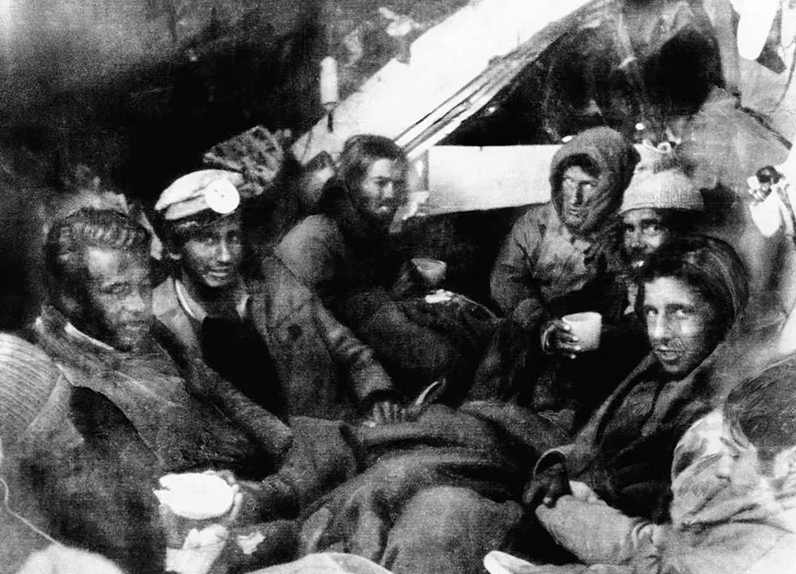
Sometime in 2024, i listened to the You’re Wrong About episode Flight 571: Survival in the Andes with Blair Braverman, then went down the rabbit hole with another podcast series, from Wondery: Plane Crash in the Andes the kind that takes a couple episodes to walk you through everything: the plane crash, the freezing temperatures, the long starvation, and that impossible, awful choice.
It’s a brutal story. A few days later, i brought it up over dinner with friends in a Chinese restaurant in Edinburgh. We were halfway through sharing dishes when the conversation turned, as it sometimes does, toward the hypothetical. What would you do? Someone said they wouldn’t make it. Another, wisely, added "it's too extreme to know how I'd react". But weirdly, the part that got under my skin the most wasn’t the crash itself or the survival. It wasn’t even the cannibalism. It was what happened after - after they were rescued. After they were brought home and what we ask of survivors: what we are willing to accept and what makes us flinch.
Now i tuned in to this story via podcast more than a year ago. When the film appeared on Netflix more recently, it brought back some of the initial shock, and then the thinking process that followed. While i still haven't seen the film, Netflix flagged it at me around the same time i was following another story: the Sean Combs trial. Cassie. The lawsuit. The surveillance footage. The payout. The commentary. The federal case. i know - on the surface, these things don’t belong together. A plane crash in the Andes and a woman trying to leave a powerful man. What do they have in common?
Trauma and survival, a tale as old as time and yet there’s versions of this story we Do. Not. Like.
So i’ll beg the question, the one no one likes asking - not what happened but what had to happen for them to survive it. And whether we’re willing to accept that answer when it’s ugly. When it’s practical. When it’s desperate.
In the story of Flight 571, the survivors go through hell. Actual, sub-zero, 70-day hell. No food, no wildlife, nothing but metal and snow and bone. They try to eat the seats. The foam. The leather. The last peanut is sucked dry of its chocolate coating, then split and savoured like a feast.
Until one of them starts looking at a friend’s open wound and doesn’t just see a wound - he sees meat. Hunger changes your eyes. Eventually, they start eating the bodies of those who died in the crash. Not out of malice. Out of need.
And they survive.
But when they return, and the truth of their survival comes out, the public turns. The headlines shift. It’s no longer “miracle in the Andes.” It’s “they ate their friends.” People start asking questions - the kind that aren’t really questions at all. How could they? Was it necessary? Was it right? Was it forgivable?
The survivors, devout Catholics, write to the church, desperate for reassurance. They need someone to tell them: yes, God understands. Yes, what you did to survive was human. And still, even now, it makes people uncomfortable.
i think about that kind of discomfort when i see how people talk about Cassie Ventura. The way they pick apart the timeline. The payout. The silence. The staying. “Why didn’t she leave sooner?” “Why is she saying something now?” “Is this just for money?”
People watched her run from the hotel room: beaten, cornered, terrified. And they questioned her - why didn’t she, why, why, why. Still - always - her. We love a survival story until it clashes with our moral grammar.
Like the settlement. The money. The part people seize on like it’s proof of something dirty. We do this thing, where the moment a survivor accepts compensation, we decide the story is tainted. That maybe it wasn’t real. That maybe it was just a transaction all along. As if being paid for what you endured makes the pain less valid. As if justice is only justice when it’s unpaid. Brutality only counts when you suffer without reparation.
But here’s the thing: survival doesn’t pay the bills. Trauma doesn’t cancel rent. Therapy isn’t free. Years lost to fear, control, isolation - none of it rewinds. Rebuilding yourself has a real, tangible cost.
The truth is, a settlement isn’t a reward. It’s not a win. It’s a door. Sometimes the only one left. A way to step out of the wreckage and try, quietly, to build something new.
And still, we ask: But why did she take the money?
Maybe because the system wasn’t going to give her anything else. Maybe because the lawsuit wasn’t just about retribution, it was about relief.
But more than anything, maybe because she deserved it. And we don’t like to admit that survivors deserve anything.
When the stories of survivors stirs something too close to our own shame, suddenly the tale is a problem.
“But they ate people.”
“But she didn’t leave.”
Obviously, the scale and context couldn’t be more different, but the public response, the recoil from pragmatic survival, feels eerily familiar.
We want victims to be clean. Noble. Clear-eyed and leaving at the right time. We want perfect suffering with a clear exit plan. But survival in abusive relationships - especially when there’s power, money, fame, surveillance - doesn’t work like that.
Sometimes there is no safe exit.
The truth, the hard, unpalatable truth, is that women who try to leave violent partners are often the ones who don’t survive. The moment of leaving is statistically the most dangerous part. That’s the part no one wants to say out loud. Because if we admit that leaving can get you killed, we have to abandon the comforting myth that escape is just a matter of willpower. That bravery is always rewarded. That clean breaks are possible.
So instead, we ask the easier question. Why didn’t she leave?
But often, she didn’t leave because she wanted to live. And that choice - of life over clarity, of safety over spectacle - doesn’t fit the narrative we want.
It doesn’t make for good headlines.
It just makes sense.
There’s no trail map out of abuse. Sometimes the only way out is to do something that won’t look heroic from the outside. Sometimes it means staying longer than you should. Sometimes it means negotiating with the devil to keep yourself alive. And people don’t like that.
Because we don’t like survivors who survive wrong.
But what is “wrong” in the context of survival?
The truth is - Cassie didn’t die. She didn’t crash. She endured. She adapted. She survived in whatever way she could. And now she’s resurfaced, trying to speak. And like with the Andes survivors, we’re more interested in the how than the hurt. More obsessed with the method of escape than the fact she needed to escape at all.
We do this. Over and over. We celebrate pain that looks poetic and punish the kind that’s pragmatic. We trust people who fall apart in the “right” way. Who cry in front of the cameras. Who don’t accept settlements. Who escape gracefully. But when survival is ugly - when it involves eating flesh or taking money or staying silent for too long - we get squeamish. We look away. Or worse, we judge.
But survival is rarely graceful. It’s rarely morally tidy. And sometimes it requires doing things you’d never imagine doing - things you hope no one ever finds out.
And yet, they did survive.
Isn’t that the point?

If you made it this far, thank you, Combs trial results are no longer pending and i wanted to add some closing thoughts to this moment in our history.
Epilogue: On Redemption
We say we want the truth. But more often, what we really want is a clean narrative. One with suffering that looks noble. With villains who stay gone. With survivors who don’t make us uncomfortable.
But the truth? The truth is messy. It survives badly. It leaks. It doesn’t always cry on cue. It might take a payout. It might stay too long. It might speak years later, hoarse and tired, and still be disbelieved.
And when the truth makes us flinch, we look away. Or we forgive too quickly -especially if the harm came wrapped in fame. Especially if the abuser knows how to rebrand.
Mark my words - if Sean Combs walks, or fades from consequence, the script is already written. He’ll vanish just long enough to say he’s been on a journey. He’ll find God. Or say he did. He’ll emerge with new language - soft, spiritual, media -trained. A man renewed.
Russell Brand now hides behind scripture and wellness jargon on YouTube. Chris Brown remixes repentance into tracks while never leaving the club, still as violent as ever. Mark Wahlberg sells Catholic discipline on a prayer app. Even R. Kelly tried it, from a prison cell.
They don’t repent. They repackage.
And we let them.
Because men, especially famous ones, are granted infinite versions of themselves. They get to be complicated. They get to be forgiven.
Women, meanwhile, are flattened. They are on trial even when they are not. Amber Heard didn’t get a second act - she barely survived the first. Megan Thee Stallion had to prove her pain in public. Cassie ran, was caught on tape, sued, settled, and still gets asked if it was real. Combs lawyers can still argue she is the winner in this situation, knowing precisely how to tap into the widespread, subconscious misogyny that permeates the culture. There’s no redemption arc for women who live through the worst. Just suspicion.
And for those who carry faith into these stories - for the Christians, the churches, the communities of the cross - maybe the question is this:
Why do violent men keep finding shelter with you?
Why is it so easy for them to be embraced, to be welcomed back, to be called brother while the women they harmed are left outside, still bleeding?
Why is it so easy to believe in a man’s redemption, and so hard to believe in a woman’s wound?
What does that say about the shape of your grace? About who gets it - and who doesn’t?
The answer is misogyny by the way.
This is the real story: we don’t hate survivors. We just hate when survival messes with our moral order. We love resurrection - but only for certain people. We love the idea of forgiveness - but only when the abuser is charming enough. We say “believe women,” but what we mean is: believe them, unless it’s inconvenient. Unless it costs us something. Unless it makes us see ourselves.
So no, survival isn’t always beautiful. But it is still survival.
And it still matters.
Even when it makes us uncomfortable.