#1 Utopia of Play: In the beginning there was labour...

#1 Utopia of Play: In the beginning there was labour...
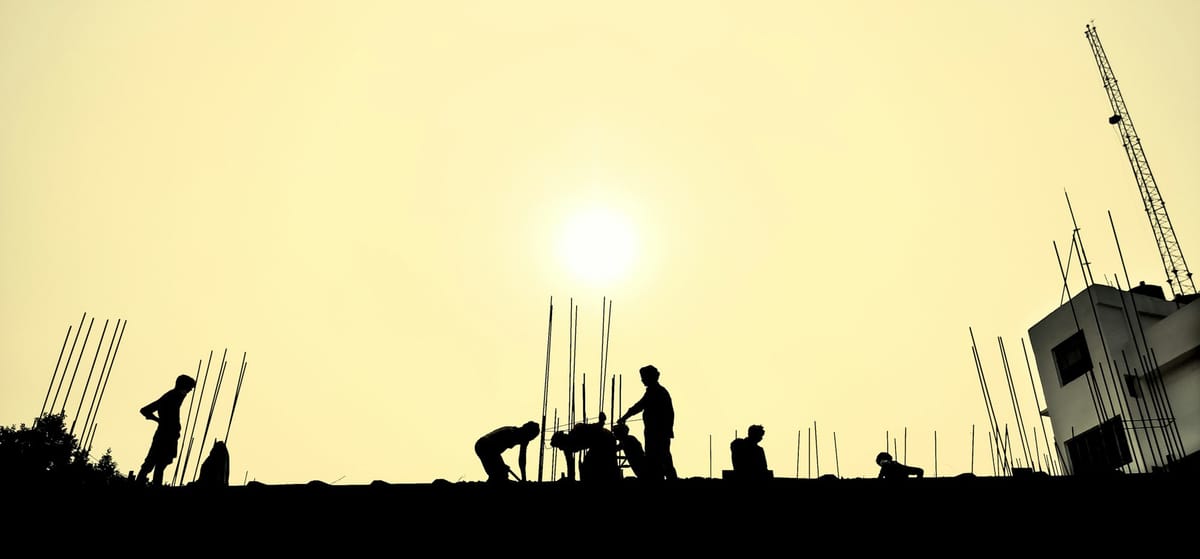
Photo by Rahul Kashyap / Unsplash

...or why everything worth learning happens in play

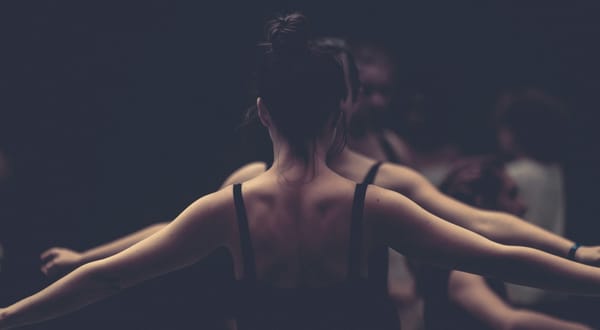
i recently spoke to a ballet teacher about wanting to nail multiple pirouettes and he told me it only happens during play. In class, the structure works against you. You get 30 seconds at most to try it, then the exercise moves on. Any teacher can tell you what to fix, what position to hold, what direction to move in, how to engage your core, but the ability to translate information into movement? That happens elsewhere. It happens in play.

This year, i've been blessed to work with a client who instinctively understands this. That switching off, moving away from the problem, having actual conversations - that's where breakthroughs live. Our best work came not from whiteboards or optimisation frameworks, but from talking about travel, grief, philosophy - simply playing with ideas until something unlocked.

And this isn’t anecdotal. Some of humanity’s most important scientific breakthroughs - from Fleming’s discovery of penicillin to Kekulé’s dream of the benzene ring - emerged from wandering curiosity, from messing around without an immediate goal.

So what does nailing a pirouette, producing great work through conversation, and stumbling on antibiotics have in common? Where am i going with this?

These recent examples are bound to something i realised five years ago: that we've relegated play to stolen moments while accepting work as our default reality. We treat joy like contraband, smuggling it into our lives between meetings and metrics.

The irony of manufactured play

In 2019, i had left a tech job to join the games industry and entered a workplace culture that contrasted that of my tech experience to date. i'd naively been imagining i was stepping into a world where “play” was sacred. Instead, i entered a culture where creativity was rationed, hierarchy calcified, and metrics worshipped.

Inside this company, career progression was opaque and arbitrary. Power flowed upward through invisible channels, while the rest of us clocked hours, logged tickets, endured micro-reviews. Minor missteps were documented. Slack channels felt like open-plan surveillance.

i knew i shouldn't stay in this environment and was ready to leave before my probation period was up. i was working in games - supposedly creating "play" - in an environment so sterile it could've been a morgue. A panopticon of hyper-alert employees and hyper-observant management. The irony wasn't lost on me: here i was, in an industry built on play, in a culture that had murdered it.

The pause that wasn't a pause

By early 2020, i was already planning an exit: perhaps return to education, pick up freelance work, maybe finally do the Masters and PhD i’d been circling for years.
i even met up with a former colleague to discuss about joining their team at another company, perhaps part time so i could study.

Then we got the stay at home order and the start of 5 years that would be unlike anything we'd lived through prior.

When Covid hit, the world accidentally admitted which work actually mattered. Remember? Essential workers risked their lives while the rest of us were sent home to our pixelated lives. Or furloughed, if “work” couldn’t be mediated by screens.

This was the mental and actual career point i had arrived to before i was able to put together the ideas i want to share in this series.

The pandemic gave me something unexpected: time to think. While my employers' repressive regime operated at a much-welcomed distance, i dove into my Masters at SOAS. Started dancing for the first time in my life. Watered pixelated flowers in Animal Crossing at midnight and realised - uncomfortably - that even our fantasies of freedom come itemised.

Yes, that's right, I became fascinated by a feature in Animal Crossing during my research: you start the game already in debt to Tom Nook, a tanuki landlord who's been called everything from anarcho-capitalist to oligarch. You spend the entire game grinding - collecting items, crafting, catching fish and bugs - all to pay back endless loans. The “island paradise” you escape to replicates the exact economic logics you’re trying to flee. Even our digital utopias arrive prepackaged with rent.

Reclaiming the starting point

My former undergraduate professor, David Graeber, had been tracking this same question. His work on "bullshit jobs" - roles that even the people doing them secretly believe shouldn't exist - connected to something deeper. These jobs don’t just feel meaningless - they exist to consume the hours we’re forbidden to give to joy.

Shortly before his death, Graeber wrote:

"the crisis we just experienced was waking from a dream, a confrontation with the actual reality of human life, which is that we are a collection of fragile beings taking care of one another."

The pandemic revealed that there is indeed a split between work that is necessary and work that is not. And most of us "don't do anything at all but spin fantasies, extract rents, and generally get in the way of those who are making, fixing, moving, and transporting things."

But what about play? Graeber suggested something radical:

"play is, if anything, the basis of all physical reality, it's the ultimate natural principle."

Not some peculiar anomaly. Not an indulgence. Not an escape. Our starting point.

Play is everywhere once you start to notice it - in flirtation, dreaming, grieving, satire, protest. How entire cultures mark transitions through ritual and ceremony. Roberte Hamayon calls it "the crucial ambiguity between fiction and reality that is at the heart of play as a phenomenon."

Csikszentmihalyi understood this when he described flow - that state where time disappears, self-consciousness fades, and something essential emerges. It's what i felt arranging digital furniture during lockdown. What happens when i write without institutional purpose. What my ballet teacher meant about finding the pirouette.

When you understand play as something foundational in helping us understand and create our world, it begs the question of why we stop doing it in adulthood.

The cost of exiling joy

By 2020, my days were split between spreadsheets and citations, Teams calls and Slack pings, research databases and nightly death counts. Governments lied, people died, and we were told to take “little mental health walks” while pretending Zoom fatigue was our greatest problem.

Work, meanwhile, carried on undisturbed. Deadlines. Reviews. Ship dates. Deliverables. Performance evaluations, even - as though the true measure of humanity during mass trauma was our ability to maintain productivity.

In contrast to this world of work, we’ve allowed adulthood to become a steady erosion of play. Children learn about trust, limits, consequences and creativity through games. They understand the world through it. Animals play-fight to learn how not to kill each other. Arguably, as i can attest, so do human siblings. It starts off foundational. We all did it. Parents continue to encourage it. Entire educational systems such as Waldorf, are designed around prolonging it in childhood. Entire cultures have rituals of play - communal, spiritual, deeply serious in their joy.

And so i want to question why our relationship to play became transactional - something to be earned, or justified. That it was only acceptable if it looked like self-care, or could be presented as “recharging” for more work. Because all that time, and all that play, allowed something more crucial to take place - suddenly i was able to imagine.

And imagination is dangerous because it invites questions systems prefer you don’t ask:

  • Why is joy rationed while productivity is infinite?
  • Why does living cost so much - and who decided survival should depend on perpetual work?
  • What could adulthood look like if play were central, not peripheral?
  • If the pandemic revealed which work truly matters, what would it mean to structure our lives around joy, care, and creative play instead?
  • And - maybe most provocatively - what kind of world might we create for others and future generations if we took this possibility seriously?

Next time: Playing with the gods and why Christians decided fun was suspicious.


References:

Csikszentmihalyi, M. and Bennett, S. (1971) 'An exploratory model of play', American Anthropologist, 73(1), pp. 45-58.

Graeber, D. (2018) Bullshit Jobs: A Theory. London: Allen Lane.

Graeber, D. (2020) 'After the pandemic, we can't go back to sleep', Jacobin, March. Available at: https://jacobinmag.com/2020/03/david-graeber-coronavirus-pandemic-economy (Accessed: 10 January 2025).

Hamayon, R. (2016) Why We Play: An Anthropological Study. Chicago: HAU Books.